




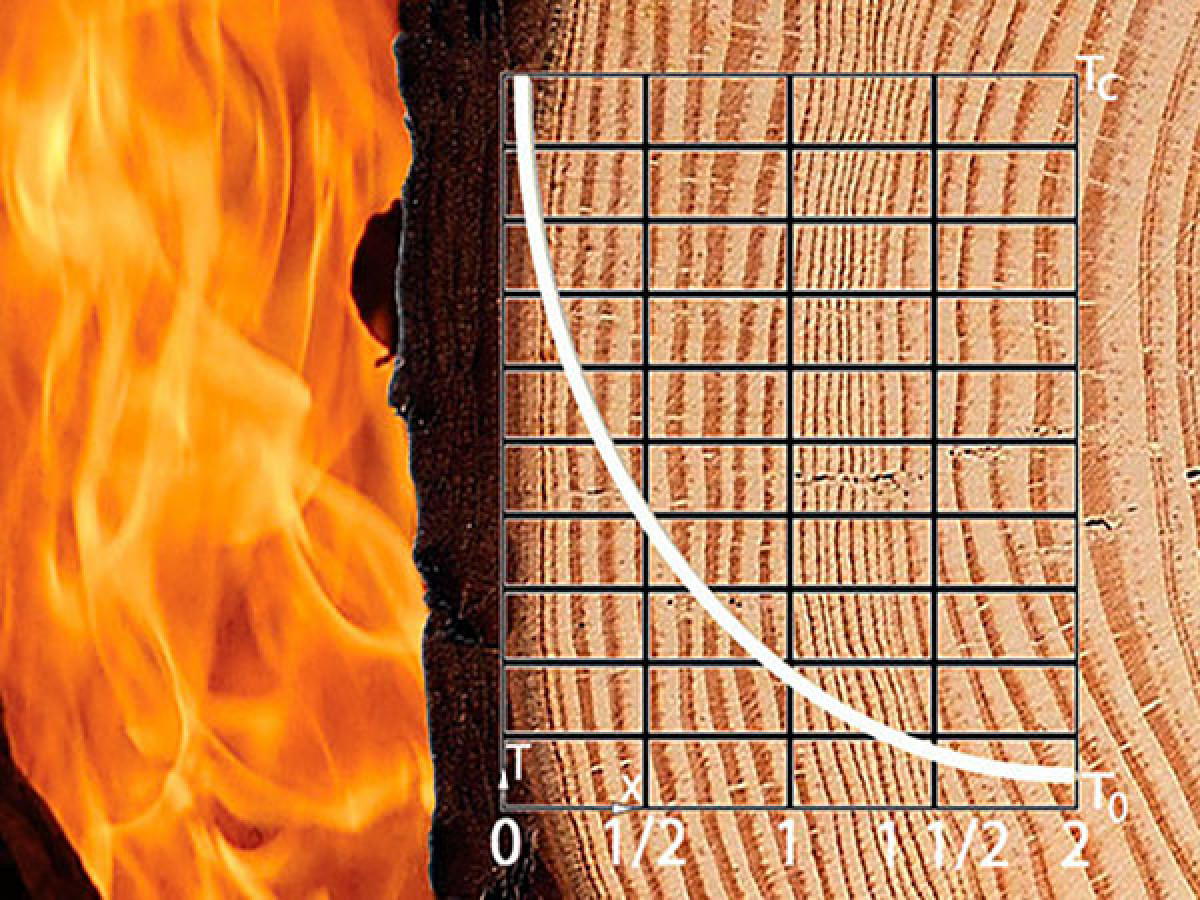
Fire-retardant treatment of wood is often confused with antiseptic treatment. It is believed that fire and bioprotection protects wood not only from fire, but also from rot, mold, wood-eating insects, so many seek to provide their wooden products and buildings with complex impregnation for all occasions with just one wood protectant. Will this help - we will understand in this article ...
We note right away that the means of fire-bioprotective treatment are divided into two groups that differ in physical and chemical properties: a) fire-retardant paints, b) fire-bioprotective impregnations.
fire retardant paints
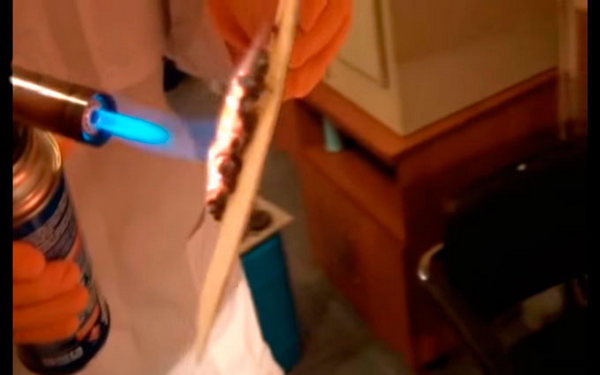
Fire-retardant paints create an integral coating for wooden structures and surfaces, which, in the event of exposure to fire and high temperatures, begins to swell and forms a thick non-combustible layer of coke, which for a sufficiently long time (about 90 minutes) prevents the transfer of high temperatures to wood. This type of protection is called intumescent. Intumescent paints have the first group of fire-retardant efficiency, tolerate ultraviolet radiation well and form a durable coating up to 10-15 years. However, they are not designed to protect wood from rot, mold, scaly, and other types of biodefeat, but only from fire and high temperatures. An example of such a paint is Fireproof Coating in our product catalogue.
Fire bioprotective impregnations
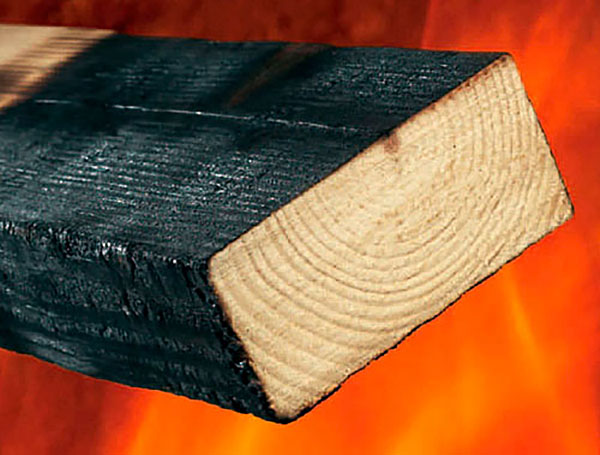
Fire-retardant impregnations have an evolution of 3 generations. The first generations of fire retardant impregnations contained chemical components that, when reacted, under the influence of fire and high temperatures, emitted non-combustible gas and prevented the wooden surface from igniting. However, they had several significant drawbacks: 1) they reacted with metal parts of structures and caused them to corrode; 2) the non-combustible gas released by the temperature reaction was quite toxic and poisoned the room in which people could be.
The 3rd generation of fire and bioprotective impregnations, created on the basis of phosphate salts, also has 1 fire retardant efficiency group, no longer causes metal corrosion and helps to reduce smoke formation, being moderately toxic according to the GOST 12.1.044-89 standard. This is a relatively safe product. The dried impregnated surface does not form efflorescence and is difficult to wash out.
An example of the latest generation of bio-flame retardants is Firebio Impregnation from our catalog of flame retardants.
A side property of the phosphate-salt base was its beneficial effect. An impregnated wooden surface reduces the risk of bioinfestation by fungus and mold. And although with short-term moistening it is hard to wash out, but with prolonged exposure to moisture, it still loses its protective properties, because it is designed to resist, first of all, fire ...
Therefore, in most cases, fire and bioprotective impregnations are used for interior work, protecting the wooden structures of attics, mansards, verandas, sheds, etc. in places where fuels and lubricants and explosive materials are stored and in their packaging, extending their service life.
Also, along with the use of modern fire retardants of a new generation, at facilities where the use of fire retardants approved by the current GOST standards is required, traditional fire retardants, for example, are also used. BS-13. The composition of BS-13 is also present in the catalog of our products.
Conclusion: The use of fire-bioprotective impregnations as a means of preventing mold and decay of wood is possible in dry indoor areas, to protect wooden structures and roof structures. For external protection of wooden facades of buildings, panels and finishes, it is still worth considering antiseptic impregnations, and wood-protective coating systems using indelible antiseptics and finishing decorative coatings, such as antiseptic paints, azures, and glazing wood preservatives , since fire protection is primarily designed to resist fire and high temperatures in the event of fires.