




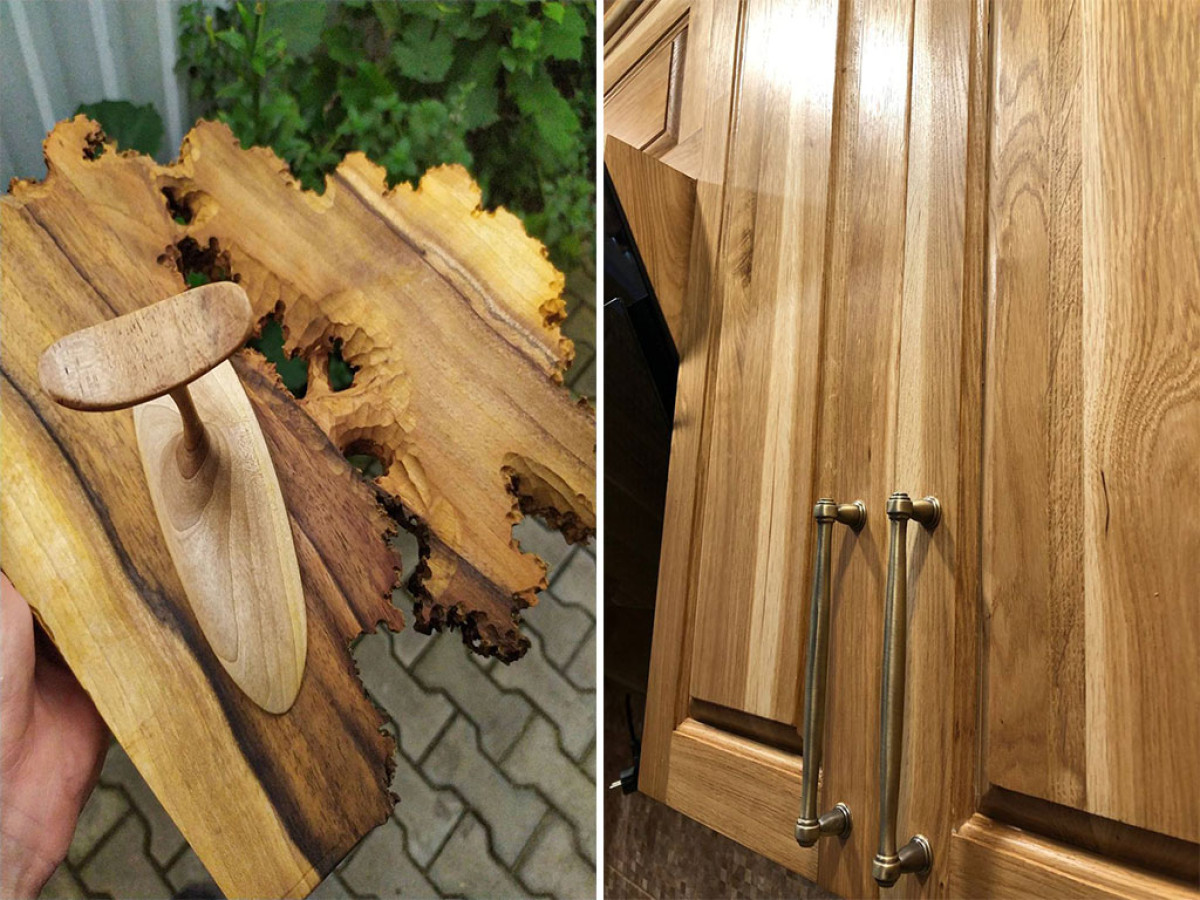
If you like natural wood in the interior, and want to embody it in the design of your home, you should know some features for caring for it.
Unlike artificial materials, which, when worn out, are only subject to replacement, wooden lining, panels, parquet, etc., are renewed even when they lose their external gloss and, as a rule, are maintainable. The downside of natural wood is the need to care for natural wood surfaces and products. There are three types of wood preservatives: varnishes, paints and oils, and today we will talk about the benefits of oils.
Wood is a very beautiful natural material with a unique texture pattern that you often don't want to hide under a layer of paint. The varnish also forms a transparent coating, but it forms a polymer film that cracks and fades over time, and although the process is not a quick sanding and re-varnishing, it is a very laborious and dirty process.
The oil layer cannot be damaged or scratched (the wood itself bears the load, and the oil reduces the degree of abrasion). If there are scratches or other signs of wear on the surface of the wood, you do not need to resand most of the surface, but just wash off the dirt and dust, it is possible to clean the affected area itself, and then apply oil until the surface is saturated. Unlike varnish or paint, there will be no visible traces between the old and new coating.
The oil impregnates the tree, entering deep into its fibers, protecting it from moisture penetration and preventing the development of fungal infection processes. It penetrates into the wood fibers, and not only remains on the surface like varnish or paint. Oil is the most environmentally friendly type of wood protection and also the oldest. The smell of natural oil, whether linseed or tung oil, can be strong at first after treatment, but it quickly disappears and no longer bothers, without causing allergies, without affecting health, without causing harm to anyone. If wood oil has no odor, it is either highly refined or not natural. In the first case, it will have a very high price, in the second it will lose its environmental friendliness, or it will undergo a chemical reaction with special additives, the quality of which depends on the quality of the wood oil itself.
Supplements are helpful!
One of the disadvantages of natural wood impregnation oil is its drying time - it dries for a very long time. To reduce the drying time of the oil, at least up to 24 hours, additives are used that accelerate the polymerization and weathering of moisture, and so we get a stable dry surface that repels dust, moisture, and dirt.
Other additives improve wear resistance. This additive contains all floor oils and furniture oils that must withstand active operational load. The most natural and natural additive to oil for wood is beeswax, such a product even has a separate name - oil wax :) Oil wax not only improves the moisture resistance of a wooden surface, but also makes it tactilely pleasant!
If a wooden surface is often exposed to direct and constant sunlight, it will certainly burn out. Oil impregnations are often tinted to give the wood the desired shade. Although dark, saturated colors fade more slowly, if a UV additive is used, the life of the oil coating is significantly extended without losing its appearance.
The main requirements for modern oil impregnations are, of course, environmental friendliness! Therefore, all components of oil waxes, protective oils for targeted use, for example, for floors or furniture, terrace oils, and other types of products based on natural oils, strictly comply with European standards and the most stringent environmental standards, because they are often used by people in everyday life.